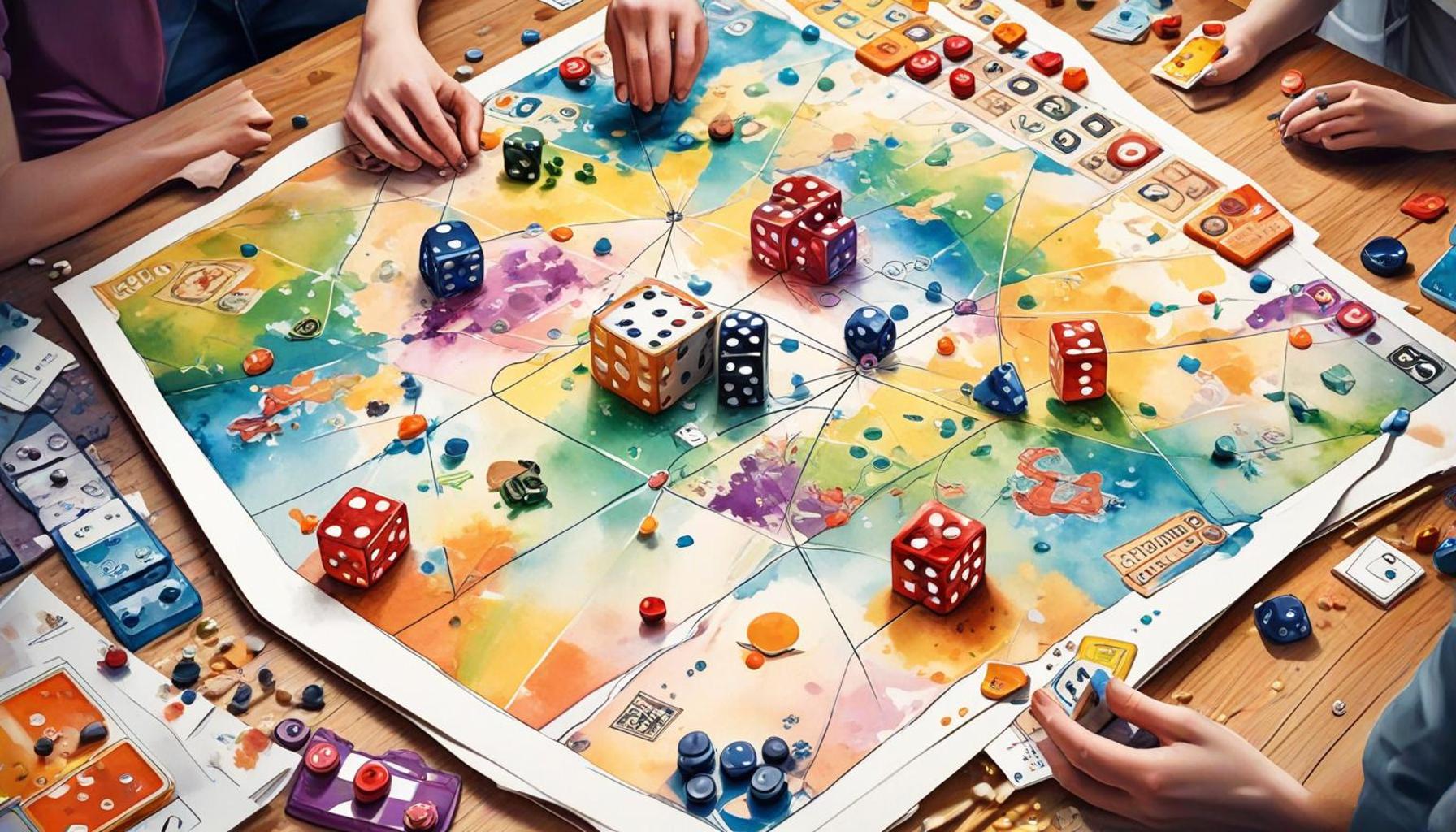
Boost Problem-Solving Skills with Logic Games Develop Critical Thinking

In today’s fast-paced world, the ability to effectively solve problems is an invaluable skill that can set individuals apart in both personal and professional environments. Among the most engaging methods to cultivate this skill are logic games and mind puzzles. These activities not only entertain but also enhance cognitive abilities, enabling players to tackle challenges with innovative solutions.
By encouraging critical thinking and strategic planning, logic games serve as a practical tool in developing a person’s mental agility. They focus on various aspects, including:
- Analytical thinking
- Pattern recognition
- Creative problem-solving
As we explore the landscape of mind games and puzzles, this article will elevate your understanding by presenting the Top 5 logic games that can significantly boost your problem-solving capabilities. Get ready to discover not only entertaining options but also essential tools that can refine your thought process.
LEARN MORE: This related article may interest you
Top 5 Developing Problem-Solving Skills Through Logic Games
In today’s fast-paced and ever-changing world, the ability to solve complex problems effectively is crucial for success in both personal and professional arenas. As we encounter challenges in our daily lives, refining our problem-solving skills can lead to improved decision-making and increased adaptability. One engaging way to enhance these skills is through logic games, which not only challenge our minds but also sharpen our analytical thinking and stimulate creativity. This article delves into the top five logic games that are instrumental in developing these essential skills, providing detailed examples and insights into how they can benefit players in multifaceted ways.

5. Sudoku
Sudoku, a popular number puzzle, has captivated millions worldwide with its relatively simple premise yet significant depth. Players must fill a 9×9 grid where each row, column, and 3×3 subgrid contains the numbers 1 through 9 exactly once. Solving Sudoku requires a keen eye for patterns and strong deductive reasoning skills, making it an excellent choice for enhancing problem-solving capabilities.
By engaging in Sudoku puzzles, players can:
- Enhance logical reasoning abilities: As players analyze the grid to eliminate possibilities and determine where numbers must go, they develop a methodical approach to identifying solutions logically.
- Develop patience and concentration: The process requires sustained focus and patience as players navigate through various possibilities and systematically deduce correct placements.
- Increase mental agility: As one progresses to more challenging puzzles, the increase in difficulty demands quicker thinking and adaptability to new strategies.
Although Sudoku may initially seem simple, it serves as a foundation for understanding more complex problem-solving techniques, making it perfect for both beginners and seasoned puzzle enthusiasts.
4. Chess
Chess, often described as a game of strategy, has widespread appeal across different ages and skill levels, attracting players globally. The game is akin to a cerebral battlefield, where two players with opposing armies strategically maneuver pieces to outsmart their opponent. The rich complexity of chess provides an unparalleled opportunity to hone problem-solving skills in various ways.
The benefits of playing chess include:
- Improving critical thinking and decision-making: Players must evaluate the board from multiple angles, considering the consequences of each move and the anticipated response from their opponent.
- Encouraging strategic planning and creativity: The necessity to plan multiple moves ahead fosters a mindset that blends creativity with strategic foresight.
- Fostering a competitive spirit and better sportsmanship: Chess cultivates resilience, discipline, and respect for opponents, which are vital in both personal growth and professional environments.
Ultimately, chess encourages players to think several moves ahead, making it an invaluable tool for anyone seeking to boost their problem-solving abilities through practice and mastery.
3. Logic Grid Puzzles
Logic grid puzzles offer a fun yet challenging way to sharpen deductive reasoning skills. These puzzles involve using a grid and a set of clues to ascertain relationships among diverse entities, such as people, objects, or locations. Solving logic grid puzzles requires careful analysis, a strong grasp of logic, and attention to detail—all key components of effective problem-solving.
The advantages of logic grid puzzles include:
- Enhancing the ability to analyze complex information: Players need to mentally juggle multiple variables as they assess how clues interconnect.
- Fostering logical reasoning: The structured nature of the puzzles trains players to follow data-driven pathways to accurate conclusions.
- Encouraging a systematic approach: Players develop a disciplined, methodical process for tackling puzzles, which can be applied to real-world problems.
As players improve their capability to draw quick and accurate conclusions from facts, they become more adept at solving tricky, multifaceted problems—which is a skill that often translates beyond the realm of puzzle solving.
2. Escape Room Games
The surge in popularity of escape rooms has transformed what was once a niche interest into a mainstream pastime. These immersive experiences require groups to solve a series of collaborative puzzles within a themed environment under a set time limit to “escape.” As these games transcend typical logic challenges, they focus heavily on communication skills, teamwork, and time management, all crucial in effective problem-solving.
Participants can benefit from escape rooms in several significant ways:
- Improving group dynamics and collaboration: Success hinges on clear communication, pooled resources, and cohesive teamwork.
- Encouraging lateral thinking: Many escape room puzzles necessitate creative, out-of-the-box approaches to unlock unconventional solutions.
- Promoting quick decision-making under pressure: The ticking clock creates a scenario where decisions must be made efficiently, preparing participants for time-sensitive challenges in reality.
The shared experience of an escape room challenge not only builds problem-solving skills but also emboldens social and emotional intelligence. By requiring participants to adapt their strategies swiftly while effectively communicating with others, escape room experiences significantly contribute to personal and inter-personal development.
1. The Rubik’s Cube
The Rubik’s Cube, an iconic 3D combination puzzle launched in the 1970s, stands as a timeless favorite, challenging and fascinating individuals globally. Successfully solving the cube demands a comprehensive understanding of spatial reasoning, pattern recognition, and sequential logic, while fostering numerous fundamental problem-solving skills.
The Rubik’s Cube enhances skills such as:
- Enhancing spatial and analytical skills: Solvers must visualize moves in three dimensions, developing an acute sense of spatial awareness.
- Encouraging strategic planning: To solve the cube efficiently, players need to devise algorithms, promoting advanced planning and foresight.
- Fostering perseverance and patience: Since the puzzle often requires trial and error, solvers learn the value of persistence and resilience in overcoming challenges.
Far more than just a pastime, the Rubik’s Cube provides a robust framework of problem-solving strategies that extend into numerous areas of life, from academic pursuits to professional careers, making it an invaluable tool for enhancing cognitive capabilities.
In conclusion, engaging with these logic games paves the way for substantial growth in problem-solving skills that are transferable to real-world settings. Whether through the patience-building finesse of Sudoku or the strategic complexity of chess, each game imparts unique lessons and enables players to tackle diverse challenges more effectively. By integrating these games into your routine, you can foster not only your cognitive skills but also a competitive edge in navigating the complexities of modern life.
| Category | Description |
|---|---|
| Cognitive Development | Engaging in logic games stimulates critical thinking and boosts memory retention, enabling players to process complex information more effectively. |
| Problem-Solving Strategies | These games encourage the use of various problem-solving techniques, such as trial and error, pattern recognition, and deductive reasoning, essential for real-world applications. |
| Social Skills Enhancement | Playing logic games in groups fosters teamwork and communication, allowing individuals to express ideas and challenge each other’s thinking in a collaborative environment. |
| Stress Reduction | Participating in strategic games can serve as a fun escape, leading to reduced stress levels and improved mental health, providing a healthy balance in daily routines. |
YOU MAY ALSO LIKE: Read this other article
Frequently Asked Questions About Developing Problem-Solving Skills Through Logic Games
How can logic games improve problem-solving skills?
Logic games challenge players to think critically and strategically, enhancing their ability to approach complex problems. These games often require players to identify patterns, apply rules, and consider multiple outcomes. Engaging regularly with logic games can sharpen one’s ability to analyze situations and devise strategic solutions. According to research, individuals who play such games tend to develop a heightened ability for critical thinking and decision-making.
What types of logic games are most effective for developing these skills?
There are various types of logic games that can aid in skill development, including puzzles like Sudoku, strategy games like chess, and digital games designed with logic-based challenges. While all of these games contribute to improving problem-solving abilities, it’s important to select games that align with your interests. This ensures sustained engagement and maximizes learning potential. Interactivity and complexity in a game increase the likelihood of cognitive improvements.
Can children benefit from playing logic games, and if so, how?
Yes, children can greatly benefit from engaging with logic games. These games not only keep children entertained but also promote cognitive development. They help cultivate skills such as spatial reasoning, memory, and concentration. Educational research suggests that logic games are particularly effective in underpinning mathematical skills and improving overall academic performance. Moreover, they encourage children to embrace challenges and foster a growth mindset.
Are there any downsides to relying on logic games for skill development?
While logic games are beneficial, they shouldn’t be the sole method of skill development. Over-reliance on any single type of cognitive activity can lead to a lack of well-rounded learning experiences. It’s crucial to balance logic games with other educational and physical activities. Furthermore, excessive screen time, especially with digital games, can lead to potential health issues such as eye strain. Moderation is key when integrating logic games into learning routines.
How often should one play logic games to see a noticeable improvement in skills?
Consistency is more important than the duration of time spent in each session. Engaging with logic games for as little as 15 to 30 minutes a day can yield significant improvements in problem-solving abilities over time. It’s crucial to find a routine that suits your schedule and allows regular practice while ensuring that this activity complements other daily learning endeavors.
RECOMMENDED: Check out this similar article
Conclusion
In an increasingly complex world, the ability to think critically and solve problems is not just valuable—it’s essential. Throughout this exploration of developing problem-solving skills through logic games, we have delved into various facets that highlight the importance and effectiveness of these intellectual pursuits.
Logic games and puzzles are not merely recreational; they serve as powerful tools to enhance cognitive capabilities. First and foremost, they push individuals to think outside the box, encouraging creative strategies and the application of robust analytical skills. This process aids in honing one’s ability to dissect complex problems and explore innovative solutions, a valuable skill in both personal and professional realms.
Furthermore, engaging with logic games fosters a sense of perseverance and patience, as these activities often present challenges that are not immediately resolvable, demanding persistence and strategic planning. Additionally, these games are accessible to a wide audience, making problem-solving training available to various age groups.
Moreover, there’s a significant social component that cannot be overlooked. Team-solving experiences in logic puzzles promote collaboration, communication, and shared learning, all of which contribute to improved interpersonal skills. This aspect is particularly beneficial, as it aligns with the collaborative nature of modern working environments.
While further research into the long-term effects of these practices could provide even deeper insights, there is no denying that logic games are a remarkable avenue for bolstering problem-solving abilities. They offer a dynamic, engaging, and effective way to cultivate these skills. Encouraging the incorporation of logic puzzles into educational curriculums and personal routines could open new doors for cognitive development and empowerment.
Ultimately, the world of logic games is not just a mental playground but a foundational landscape for developing skills that are crucial for navigating the complexities of modern life. It invites readers to explore this realm further, revealing a pathway to enhanced personal and professional growth.

Linda Carter
Linda Carter is a writer and puzzle expert specializing in mind games, brain teasers, and cognitive challenges. With extensive experience helping individuals enhance their problem-solving skills and think critically, Linda shares her knowledge on our platform. Her goal is to empower readers with practical advice, engaging puzzles, and strategies to sharpen their minds and achieve success in the captivating world of mind games and puzzles.