
Unleash Puzzle Power Boost Memory Focus with Brain-Boosting Games
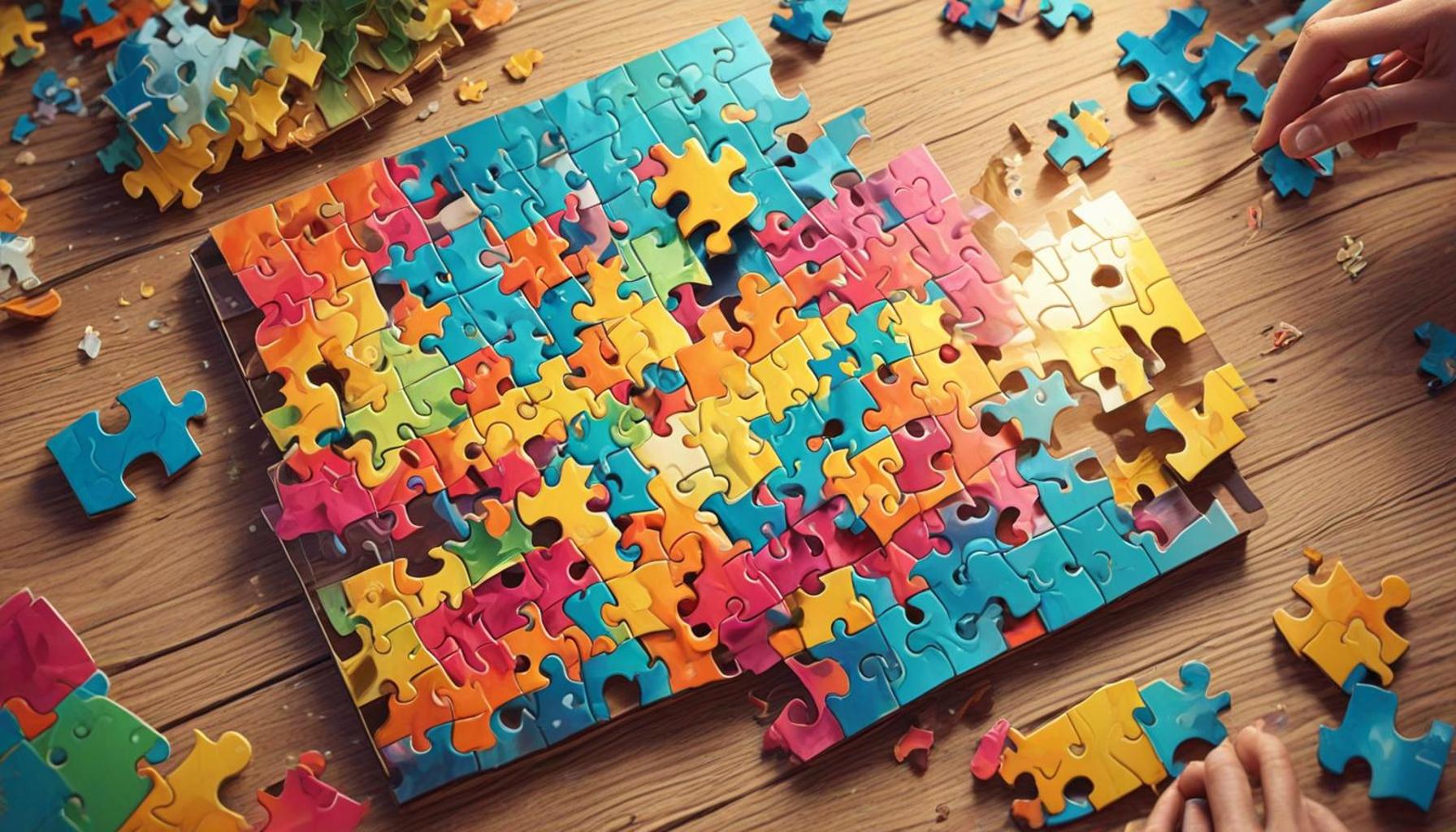
The Power of Puzzles in Modern Life
In today’s world, where distractions seem to be lurking around every corner and mental sharpness is vital for both personal and professional success, the role of mind games like puzzles has become increasingly significant. These engaging activities offer far more than just entertainment; they provide remarkable benefits for memory enhancement and concentration improvement. As individuals worldwide search for effective methods to boost their cognitive abilities, puzzles are emerging as an innovative tool to support brain health.
Boosting Cognitive Abilities
Research suggests that solving puzzles engages various regions of the brain simultaneously, fostering new neural connections and enhancing mental agility. These brain-teasers aren’t just fun—they help people build problem-solving skills and promote logical thinking. By continually challenging oneself with puzzles, individuals can maintain their mental vigor and potentially ward off cognitive decline.
Puzzles for All Ages
Puzzles have a universal appeal, offering benefits to individuals of all ages. For children, they support developmental processes such as improving hand-eye coordination and spatial awareness. For adults and seniors, puzzles are a perfect way to maintain sharp cognitive faculties and enhance memory retention. Notably, engaging with puzzles has been linked to the prevention of age-related neurological conditions such as Alzheimer’s and dementia.
Top 5 Brain-Boosting Games
- Sudoku: Enhance your numerical prowess and logical reasoning by tackling this number puzzle that requires strategy and patience.
- Crossword Puzzles: Build an expansive vocabulary and improve word recall by solving these popular linguistic challenges.
- Jigsaw Puzzles: Enhance spatial reasoning and foster visual memory through the assembly of intricate images.
- Chess: Master strategic thinking and long-term planning while playing this classic, globally revered game.
- Rubik’s Cube: Boost your problem-solving capabilities and develop a deeper understanding of algorithms with this colorful, twisting cube.
Delve into the fascinating world of puzzles and experience firsthand their transformative power on your cognitive skills. As these games blur the line between play and purposeful mental exercise, they invite individuals to explore novel approaches to cognitive enhancement. The journey promises not just entertainment, but a path to lifelong learning and intellectual growth.</p
LEARN MORE: This related article may interest you
Top 5: Unraveling the Potential of Puzzles to Enhance Memory and Concentration
Puzzles have long captivated us, offering a delightful blend of challenge and amusement that captivates our minds and elicits our cerebral acumen. What appears simply as leisurely activity is rooted in a growing body of scientific evidence suggesting that puzzles can significantly bolster memory and concentration. This has sparked a resurgence in brain games and puzzles, not just as entertainment but as vital tools for cognitive enhancement. For seasoned puzzle aficionados or curious novices, understanding how puzzles can positively impact our mental faculties is enlightening. Dive deeper into the top five reasons why puzzles wield such power in improving memory and focus.
5. The Cognitive Workout of Word Puzzles
Word puzzles, including crosswords and word searches, transcend mere pastime engagements; they are dynamic cognitive workouts. These puzzles demand concentration, necessitating players delve deeply into their vocabulary reservoir, activating memory recall processes. Regular engagement with word puzzles not only invigorates the brain but also leads to enhanced verbal skills and memory retention.
Empirical research has highlighted that solving word puzzles stimulates the brain’s regions involved in language comprehension and information retrieval. As individuals tackle these puzzles with increasing frequency, they cultivate stronger problem-solving skills, which in turn bolster focus and concentration in daily activities. This becomes especially evident when vocabulary is put to test, requiring flexible thinking and the ability to see connections between disparate pieces of information, honing one’s analytical prowess.
- Boosts vocabulary
- Enhances memory retention
- Improves problem-solving skills
4. The Impact of Logic Puzzles
Logic puzzles such as Sudoku and logic grid puzzles engage your mathematical skills while honing logical reasoning and deductive capacity. These puzzles diverge from word puzzles by employing a different cognitive approach, one that strengthens your reasoning capabilities. The process requires players to methodically apply rules and detect patterns, often fostering an understanding of strategies that can be translated to various real-life situations.
Consistent engagement with logic puzzles is shown to enhance working memory, which deals with the short-term retention and manipulation of information. Studies reveal that individuals who regularly solve these puzzles can experience significant improvements in working memory and an increased attention span. Furthermore, as one learns to manage the delicate balance of recalling and manipulating data, these puzzles become instrumental in preparing the mind for complex problem-solving tasks encountered in everyday life.
- Enhances reasoning skills
- Improves working memory
- Increases attention span
3. Jigsaw Puzzles and Visual-Spatial Skills
Renowned for enhancing visual-spatial skills, jigsaw puzzles prompt players to engage critically with assembling various pieces into a coherent image. This activity relies heavily on concentration, as the brain must skillfully organize and interpret visual information effectively. Engaging with each puzzle piece involves a thoughtful assessment of shape, color, and fit, facilitating a deep focus that extends beyond the immediate task.
Research illustrates that assembling jigsaw puzzles enhances hand-eye coordination while boosting memory and spatial awareness. In making these connections, players involve multiple cognitive processes, promoting both memory development and sustained attention. The benefits transcend cognitive enhancement; they enter the realm of therapeutic activity that reduces stress by immersing players in a tranquil and focused task.
- Enhances visual-spatial skills
- Boosts hand-eye coordination
- Promotes cognitive processing
2. The Global Appeal of Brain Games
Brain games, encompassing a wide array of puzzles, resonate globally with individuals of all ages and backgrounds. Their enduring appeal is founded on their ability to unify social interaction with cognitive engagement. By participating in puzzles across various platforms—digital apps, online media, or traditional formats—people experience a shared activity that extends beyond the individual to group enrichment.
Engaging in these games can significantly amplify social interactions and improve focus, as players concentrate while strategizing with others. Whether played in pairs or groups, the dynamics of collaborative problem-solving cultivate a stimulating environment that, with time, leads to sharpened memory and improved focus. Such dynamics encourage communication skills, shared planning, and conflict resolution, crafting a multidimensional approach to intellectual development.
- Encourages social interactions
- Enhances collaborative problem-solving
- Stimulates cognitive engagement
1. Mindfulness through Puzzle Solving
At the pinnacle of our exploration is the profound influence of puzzle-solving on mindfulness. Engaging in puzzles can usher one into a meditative state, focusing attention entirely on the task, leading to immersion in the moment. This mindful practice significantly reduces stress and anxiety, enhancing overall mental wellbeing.
Regular engagement in puzzles not only reinforces attention but also strengthens neural pathways associated with memory, encouraging environments where learning and retention can prosper. Extensive studies corroborate these findings, establishing puzzles as not merely entertainment but as potent tools for sustaining and improving cognitive health. As individuals internalize these benefits, puzzle-solving evolves from a pastime into a vital mindfulness exercise, akin to meditation in its capacity to rejuvenate the mind.
- Enhances focus and attention
- Promotes overall mental well-being
- Reinforces memory retention
In summary, puzzles present more than a delightful challenge; they hold the potential to significantly enhance cognitive function through various mechanisms. From bolstering memory and concentration to encouraging social interaction and mindfulness, the benefits are profound and far-reaching. Thus, in a world increasingly driven by intellect, embracing puzzles could be a small yet remarkable step toward enhanced mental acuity.
| Category | Key Features |
|---|---|
| Cognitive Development | Puzzles encourage critical thinking and problem-solving abilities, essential skills that can enhance mental agility. |
| Memory Enhancement | Engaging in puzzle-solving can significantly improve short-term and long-term memory, stimulating recall and retention of information. |
| Stress Reduction | Working on puzzles can serve as a form of meditation, allowing individuals to focus and escape daily stressors, resulting in a clearer mind. |
| Social Interaction | Puzzles often promote teamwork and collaboration, fostering social ties that lead to improved cognitive outcomes through shared experiences. |
As we delve deeper into the potential benefits of puzzles, it’s essential to recognize how they serve as powerful tools for cognitive development. These activities challenge users to think critically, fostering important problem-solving skills. By piecing together various parts to form a complete picture, individuals routinely exercise their reasoning capabilities, which can align with real-life scenarios requiring analytical thinking.Moreover, the link between memory enhancement and puzzle-solving is particularly gripping. Engaging in puzzles not only stimulates the brain but also serves to boost both short-term and long-term memory. Regular engagement can train the brain to retain information more effectively, promoting a lifestyle of learning and curiosity that is essential in an ever-changing world.Additionally, let’s consider how this pastime can contribute to stress reduction. When engrossed in a puzzle, players may find respite from daily chaos, leading to a meditative state that calms the mind. This focus on an engaging task can often translate to improved mood and mental clarity, showcasing the powerful therapeutic effects of puzzles.Finally, puzzles can act as facilitators of social interaction. Whether it’s a family gathering or a friendly game night, puzzles encourage collaboration and communication. This social dynamic isn’t just enjoyable; it can lead to improved cognitive outcomes, as shared problem-solving strengthens not only relationships but also collective intellectual engagement. The sense of achievement when solving a puzzle with others reinforces the notion that teamwork can enhance individual capabilities while concurrently enjoying the process.
CHECK OUT: Click here to explore more
FAQs on Unveiling the Potential of Puzzles to Enhance Memory and Concentration
How do puzzles specifically help improve memory?
Puzzles can significantly improve memory by engaging both hemispheres of the brain. When solving a puzzle, individuals must recognize patterns and utilize memory to recall shapes, colors, and positions, which strengthens connections in the brain. Studies suggest that activities requiring memory and problem-solving, like puzzles, can enhance short-term memory and bolster cognitive functions over time. Regularly challenging the brain in this manner can lead to the formation of **more synaptic connections**, thus enhancing overall memory capacity.
Can doing puzzles actually increase concentration levels?
Yes, puzzles can greatly enhance concentration. Engaging in a puzzle requires focus and attention to detail as you work through solving individual pieces. As individuals concentrate on fitting pieces together, they must filter out distractions and channel their attention toward completing the activity. Research has shown that **regular puzzle-solving sessions can cultivate patience and improve overall concentration** skills, translating beneficially into other areas of daily life.
Are there specific types of puzzles more beneficial for cognitive development?
While all puzzles offer cognitive benefits, certain types might be more effective depending on the skills you aim to enhance. **Jigsaw puzzles** are excellent for improving spatial awareness and visual perception, whereas **crossword puzzles** can expand vocabulary and language skills. **Sudoku** puzzles are effective for enhancing logical thinking and problem-solving abilities. Choosing a puzzle type that aligns with the skills you wish to improve can maximize cognitive development benefits.
At what age can puzzle-solving start aiding cognitive improvements?
Puzzle-solving can benefit cognitive development at virtually any age. For children, exposure to age-appropriate puzzles can aid in developing problem-solving skills, hand-eye coordination, and memory. As these skills continue to develop, more complex puzzles can present new challenges, keeping the brain engaged and adaptive. **For adults and seniors, regular puzzle-solving can be a preventative measure against cognitive decline** and neurodegenerative diseases such as Alzheimer’s, by keeping the brain active and sharp.
How frequently should one engage in puzzles to see noticeable cognitive benefits?
To observe noticeable cognitive benefits, it’s advisable to engage in puzzle-solving **at least a few times a week**. Consistency is key; the more regularly the brain is challenged, the stronger and more adaptable it becomes. Just like physical exercise strengthens the body, mental exercises like puzzles fortify the brain. Incorporating puzzles into your routine can promote long-term cognitive health and sharpness.
YOU MAY ALSO LIKE: Read this other article
Conclusion
Puzzles have long been celebrated not just as a source of entertainment, but also as potent tools for enhancing cognitive abilities. Throughout this exploration of their impact, several key takeaways have emerged. Engaging with puzzles consistently can significantly bolster memory, aiding in the retention and recall of information. This is particularly crucial in an era where information overload is commonplace.
The ability of puzzles to improve concentration is another profound insight. They require sustained focus, training the mind to block out distractions and hone attention on the task at hand. This skill is invaluable, transcending beyond the world of puzzles to benefit everyday activities and professional endeavors.
Moreover, puzzles foster problem-solving skills and analytical thinking. As we dissect complex puzzles, we’re training our brains to approach challenges methodically and with patience. This has far-reaching implications, not only for academic success but also for personal growth and development.
From a holistic viewpoint, the mental exercise provided by puzzles also contributes to overall brain health. By keeping the mind active, puzzles may play a role in delaying cognitive decline associated with aging, a consideration that is gaining increasing attention in today’s societies.
In conclusion, the intricate nature of puzzles offers more than just pastime value; they open gateways to improved memory and concentration, ensuring that the mind remains agile and robust. Embracing puzzles as a regular activity is not just about solving a mystery but about nurturing a healthier, sharper mind. As such, diving into the world of puzzles offers not just temporary satisfaction, but long-term cognitive benefits that can transform our mental prowess.

Linda Carter
Linda Carter is a writer and puzzle expert specializing in mind games, brain teasers, and cognitive challenges. With extensive experience helping individuals enhance their problem-solving skills and think critically, Linda shares her knowledge on our platform. Her goal is to empower readers with practical advice, engaging puzzles, and strategies to sharpen their minds and achieve success in the captivating world of mind games and puzzles.