
Unveiling Mysteries: The Role of Adventure Games in Enhancing Problem-Solving Skills
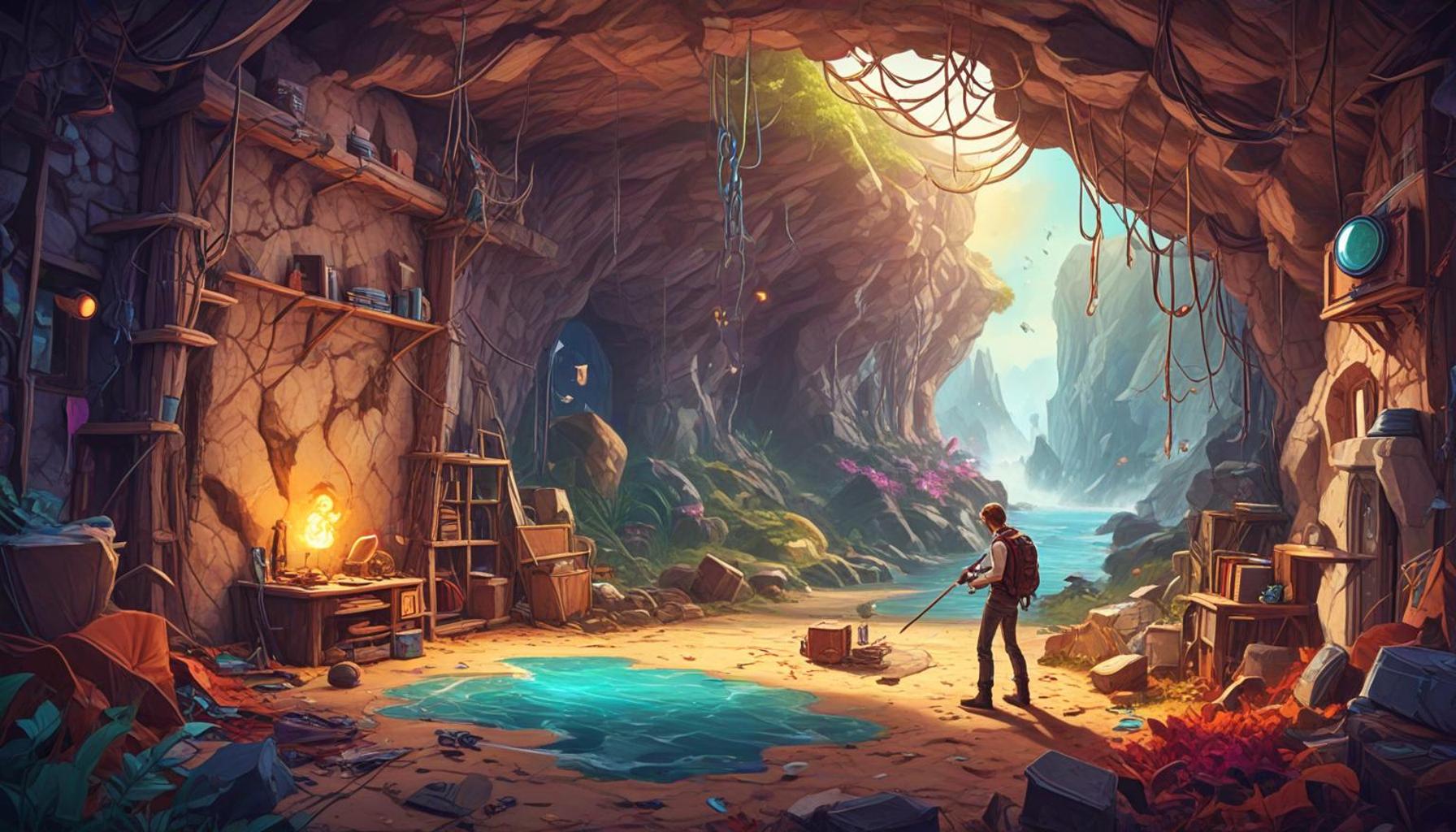
Unlocking the Potential of Adventure Games
In a society where quick and effective problem-solving skills are more vital than ever, adventure games stand out as a unique medium for enhancing these abilities. These experiences do not merely provide entertainment; they create interactive environments where players navigate complex scenarios that can help sharpen cognitive skills.
One of the key characteristics of adventure games is real-time decision making. Players are constantly faced with situations requiring immediate responses, often with significant consequences. For instance, in a game that simulates a heist, a player must choose whether to take a risk and steal a valuable artifact or retreat to avoid detection. This element of urgency instills a sense of agency while teaching the importance of weighing options quickly and effectively.
Moreover, adventure games present complex puzzles that often merge logic, creativity, and resourcefulness. A widely recognized example is the popular role-playing game, “The Legend of Zelda,” where players solve intricate riddles to progress. In a Nigerian context, games that incorporate local folklore, such as tales of the tortoise or the spider, present puzzles deeply rooted in cultural storytelling. This not only provides an engaging experience but also reinforces traditional values through gameplay.
For many players, especially in a multicultural society like Nigeria, team collaboration plays a crucial role in these games. Multiplayer modes encourage players to communicate and develop strategies together. This dynamic hones skills such as negotiation, active listening, and perspective sharing. By working with others to achieve a common goal, players learn to value diverse approaches to problem-solving, mirroring real-world collaborations.
The integration of local narratives and digital innovation in adventure games offers an expansive playground for learners. For instance, as players navigate virtual worlds inspired by Nigerian landscapes and folklore, they not only engage in entertainment but also immerse themselves in educational narratives that enrich their understanding of cultural identity. This fusion of traditional storytelling with modern gaming creates unique learning environments that captivate users, particularly the youth.

As we further explore the multifaceted role of adventure games, it becomes evident that their impact transcends entertainment. They foster skills crucial for personal and professional growth, ultimately equipping players to address real-life challenges effectively. By engaging with these immersive experiences, players are not merely passing time; they are building a foundation for critical thinking and adaptability that can serve them well in an ever-evolving world.
Join us as we delve deeper into this exciting realm and uncover the layers of experience that adventure games offer, revealing their profound influence on the development of essential problem-solving skills.
SEE ALSO: Click here to read another article
Engaging Minds: How Adventure Games Foster Critical Thinking
As players embark on the quests and challenges presented in adventure games, they encounter numerous scenarios that compel them to employ critical thinking strategies. These games immerse individuals in puzzle-solving contexts where abstract thinking and logical reasoning are essential. Players must analyze information, identify patterns, and make deductions based on limited clues provided within the game atmosphere.
One of the most significant benefits of adventure games in this regard is their ability to introduce players to a variety of problem-solving techniques. These techniques can be categorized into several key areas:
- Analytical Thinking: Players break down complex challenges into manageable parts, allowing them to address each component systematically.
- Creative Problem Solving: By leveraging their imagination, players generate innovative solutions that may not be immediately obvious, enhancing their ability to think outside the box.
- Logical Reasoning: Adventure games often require players to piece together clues in a logical fashion to uncover solutions, promoting structured thought processes.
Take, for instance, the adventure game “A Short Hike.” As players embark on a journey through a beautiful, pixelated landscape, they must navigate their path using environmental clues and interactions. Each step taken in the game underscores the importance of observation and deduction—collecting items, solving mini-puzzles, and interacting with characters are all part of a larger narrative that mirrors real-life problem-solving scenarios.
In the context of Nigerian culture, adventure games can also serve to bolster cultural relevance while sharpening problem-solving abilities. Games that incorporate local histories, such as traditional folktales or historical events, challenge players to apply their growing skill set within familiar frameworks. An example of this is the mobile adventure game “Nigerian Mythos,” which invites players to solve riddles derived from local myths and legends. This provides a dual benefit: players engage their minds while simultaneously connecting with their cultural heritage.
Furthermore, the adaptive challenges presented in these games continually evolve, forcing players to adjust their strategies on-the-fly. This aspect mirrors the unpredictability of real-world situations, where circumstances change and players must respond fluidly to new information. Through gameplay, individuals learn to be agile thinkers, ready to pivot their approaches in the face of new obstacles.
In essence, adventure games create a playground for the mind, bolstering problem-solving skills through interactive engagement. As players navigate the intricate challenges these digital worlds offer, they are unknowingly honing their abilities to tackle real-world issues, raising the question—what other dimensions of learning can these games unveil?
Unveiling Mysteries: Understanding Cognitive Development through Adventure Games
Adventure games serve as a unique platform for players to not only immerse themselves in captivating narratives but also engage in critical thinking and complex problem-solving. These digital journeys often present players with a series of challenges that require them to analyze information, develop strategies, and execute solutions in a fluid environment. As gamers venture deeper into mysterious worlds, they encounter various obstacles that foster deeper cognitive skills and enhance their ability to tackle real-world problems.
Strategic Thinking and Decision-Making
One of the primary advantages of adventure games is their ability to create scenarios that demand strategic thinking. Players must assess their surroundings, consider multiple outcomes, and make decisions quickly. For example, in games like “The Legend of Zelda” or “Life is Strange,” players not only solve puzzles but also weigh the consequences of their choices, honing their ability to strategize. This refined decision-making process reflects positively in everyday life, where critical thinking can determine success in both personal and professional situations.
| Category | Advantages |
|---|---|
| Cognitive Engagement | Promotes higher-order thinking skills and encourages players to solve complex problems. |
| Collaborative Problem-Solving | Encourages teamwork through multiplayer modes, enhancing communication and shared strategy development. |
Enhanced Creativity and Adaptability
Moreover, adventure games frequently place players in unexpected situations that require creative thinking and adaptability. As they encounter unforeseen challenges and plot twists, players learn to think outside the box and come up with innovative solutions. This ability is particularly beneficial in today’s rapidly changing world where adaptability is key to success. Titles like “Firewatch” or “Oxenfree” push players to rethink their approaches, making them more versatile in both gaming and real-life scenarios.In summary, the mechanics of adventure games unveil profound benefits, creating a breeding ground for enhanced problem-solving skills. As players navigate through intricate plots and challenges, they not only become adept at gaming but also develop essential skills that can be applied to their everyday lives. The allure of adventure games is not merely about entertainment; it serves as a gateway to cognitive growth and improved emotional intelligence, shedding light on their role as tools for personal development.
RECOMMENDED: Check out this similar article
Unlocking Creativity: The Art of Exploration in Adventure Games
The interactive nature of adventure games not only fosters analytical and logical skills but also serves as a catalyst for enhancing creativity. As players traverse through varied landscapes filled with enigmas and challenges, they are encouraged to think divergently. This is especially prominent in games that offer players choices in how they solve problems—allowing for multiple potential outcomes.
Consider the popular Nigerian-based adventure game, “Kujenga,” which integrates elements of African art and storytelling. Players engage in creative expression as they piece together artifacts to complete intricate puzzles linked to cultural heritage. The richness of the storyline coupled with the necessity to devise unique solutions empowers players to stretch their imaginative muscles. By solving problems in unexpected ways, they reinforce the value of creativity in everyday life.
Furthermore, adventure games often emulate real-world structures in which players must collaborate and communicate with other characters, enhancing their social cognitive skills. Through these interactions, players learn to negotiate, share ideas, and influence outcomes collaboratively. When players encounter obstacles that require teamwork, they must draw upon their ability to articulate thoughts clearly and consider the perspectives of others. This fosters an environment where social problem-solving flourishes, effectively allowing individuals to simulate teamwork and leadership outside the digital realm.
Moreover, players also develop a greater sense of resilience through the repeated challenges posed in adventure games. As they face setbacks—such as failing to solve a puzzle or encountering a formidable adversary—players cultivate the motivational drive to persevere. This gradual build-up of resilience is crucial, as it mirrors life’s unpredictable nature. Players come to understand that failures are not definitive endings but rather opportunities for growth and improved strategies. For instance, in the game “The Last Guardian,” the player must repeatedly navigate complex obstacles while building trust with a companion creature, showcasing the essence of persistence in problem-solving.
The replay value found in many adventure games allows players to revisit scenarios, explore alternative solutions, and refine their strategies. This cyclical nature of play ensures that critical thinking remains at the forefront of the gaming experience, encouraging players to continuously innovate their approach. As data shows, players often develop a heightened awareness of problem-solving methodologies as they strive for perfection in each scenario, transforming gaming into a dynamic learning experience.
Furthermore, the digital transformations in learning experiences through files, quests, and interactive tools significantly enrich players’ educational journeys. This aligns well with Nigeria’s growing digital landscape, where education technology is gaining momentum. Adventure games can serve as supplementary educational resources that cater to various learning preferences, thereby providing a multifaceted approach to developing essential skills. Through such integration, students can experience firsthand the relationship between gaming, education, and practical problem-solving.
As the landscape of adventure gaming continues to evolve, the intersection of technology and creativity brings forth numerous avenues for exploration. The potential of adventure games to sculpt problem-solving abilities and cognitive flexibility is indeed a realm worth delving into deeply—one that holds promise not just for entertainment, but also for invaluable life lessons.
ADDITIONAL INSIGHTS: Expand your understanding here
Concluding Insights: The Transformative Power of Adventure Games
In the ever-evolving landscape of digital entertainment, adventure games have emerged as pivotal tools for enhancing problem-solving skills in players of all ages. These interactive experiences not only challenge the mind but also nurture creativity, resilience, and social collaboration, making them increasingly relevant in today’s educational context. As games like “Kujenga” exemplify, players engage richly with cultural narratives while developing strategies to address complex challenges, reinforcing the significance of creativity in our everyday lives.
The layered narratives and dynamic environments within adventure games create a unique learning laboratory where players can experiment with different problem-solving methodologies. As they navigate through various puzzles and collaborate with digital characters, players cultivate vital skills such as critical thinking and negotiation, which are invaluable both inside and outside the game world. Furthermore, the emphasis on resilience allows players to understand that challenges often pave the way for growth, emphasizing a mindset that embraces failure as part of the journey.
As Nigeria continues to embrace digital learning and ed-tech innovations, the potential for adventure games to enrich educational experiences is profound. These games can serve as versatile educational resources, catering to diverse learning styles and providing students with practical tools to address real-world issues. Thus, the integration of adventure gaming into educational curricula could foster a new generation of problem-solvers equipped to tackle life’s mysteries. The future beckons us to explore this robust intersection of gaming, education, and cognitive development—an adventure worth embarking on for educators, students, and gamers alike.

Linda Carter
Linda Carter is a writer and puzzle expert specializing in mind games, brain teasers, and cognitive challenges. With extensive experience helping individuals enhance their problem-solving skills and think critically, Linda shares her knowledge on our platform. Her goal is to empower readers with practical advice, engaging puzzles, and strategies to sharpen their minds and achieve success in the captivating world of mind games and puzzles.