
The Impact of Puzzles on Memory and Concentration Improvement
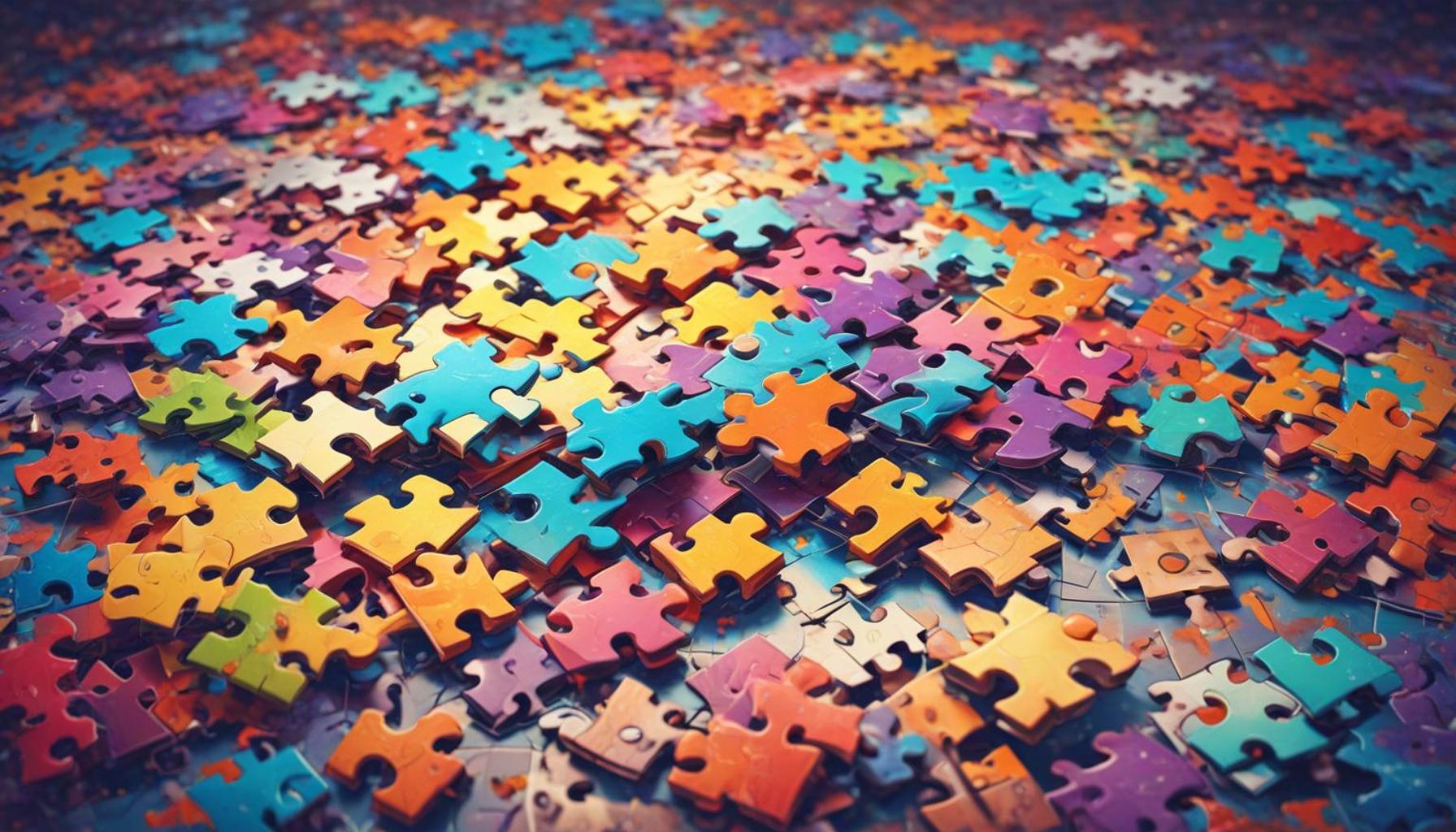
The Cognitive Benefits of Engaging with Puzzles
Puzzles have long captivated enthusiasts of all ages, but their influence extends beyond mere entertainment. Engaging in puzzling activities can significantly improve memory and concentration, offering numerous cognitive benefits. This article delves into how these stimulating challenges can sharpen the mind and enhance mental acuity.
The relationship between puzzles and cognitive enhancement is supported by various studies and expert insights. For instance, research has shown that regularly solving puzzles can:
- Boost Memory: Enhanced recall abilities through repeated engagement. The brain functions like a muscle; the more you work it, the stronger it becomes. Engaging with puzzles, such as crossword puzzles or Sudoku, requires remembering patterns, rules, or words, which strengthens neural connections and fosters long-lasting memory retention.
- Improve Concentration: Increased focus during complex tasks over time. Puzzles often require sustained attention and patience. For individuals with busy lives in bustling cities like Lagos or Abuja, dedicating time to solve a puzzle can provide a productive escape, sharpening focus and improving multitasking skills.
- Support Problem-Solving Skills: Encouragement of critical thinking and logical reasoning. As players work through challenges presented by jigsaw puzzles or logic puzzles, they learn to approach complex problems strategically, a skill that translates to better decision-making in everyday life.
In Nigeria, traditional games such as checkers and damas serve similar purposes, fostering community while enhancing cognitive skills. These games often provide an opportunity for social interaction, which is equally vital for mental health. The sense of community and collaboration in solving these fiendishly challenging games is invaluable, especially among families and friends during festive gatherings. As their popularity continues to rise with the advent of mobile apps and online gaming, more people from various socio-economic backgrounds are beginning to appreciate the cognitive advantages of digitized puzzles.
Moreover, the trend towards digital puzzles has sparked interest from various age groups, with studies showing that younger generations are spending significant time on applications that encourage problem-solving skills. These interactive platforms often offer a range of complexities catering to novice and experienced puzzlers alike, ensuring that everyone can benefit from cognitive stimulation.
This exploration reveals not just the fun aspect but also the profound effects that puzzles hold for enhancing our daily cognitive functions. Engaging in these activities regularly can be a simple yet effective way to safeguard our mental health, particularly in a fast-paced world. Join us on this journey into the fascinating realm of puzzles and uncover how they can seamlessly become a pivotal part of your routine for memory and concentration improvement.

RECOMMENDED: Check out this similar article
Enhancing Mental Agility Through Puzzles
Puzzles serve as a powerful tool for boosting cognitive abilities, particularly in the realms of memory and concentration. The act of piecing together jigsaw puzzles or cracking a Sudoku can start a chain reaction of cognitive engagement that has lasting benefits. Neuroscientific research outlines how participation in these activities promotes brain health by enhancing neurogenesis—the formation of new neurons—which is vital for memory and concentration improvement.
One key aspect of how puzzles foster memory enhancement lies in their demand for the brain to store and retrieve information. When you engage with puzzles such as crosswords, you not only need to recall words you’ve learned previously but also integrate new information. This combination stimulates the brain’s plasticity, enabling it to adapt to new experiences and enriching your vocabulary. The constant challenge of recalling names, locations, and facts, or even remembering where a particular piece fits in a jigsaw, trains the brain to retain information more effectively.
Moreover, participating in puzzles requires an unwavering focus. The necessity to concentrate on intricate details, be it a Sudoku number placement or the interlocking pieces of a jigsaw, cultivates a sense of discipline and mindfulness. This concentrated effort can significantly reduce distractions, encouraging individuals to delve deeply into a single task. In a country where daily distractions, like the hustle and bustle of Nigerian markets or the vibrancy of city life, can easily scatter one’s attention, puzzles offer an avenue to regain control over one’s focus.
In addition to enhancing memory and concentration, puzzles also contribute to improved problem-solving skills. As people tackle increasingly difficult puzzles, they must think critically and develop strategies to overcome obstacles. This critical thinking can be invaluable outside of puzzle-solving scenarios, promoting better decision-making in everyday life situations. The skills acquired through engaging with puzzles often apply to real-world challenges, showcasing their broad utility.
- Increased Neural Connections: Engaging with puzzles creates and strengthens connections between neurons, helping to enhance brain function.
- Improved Mood: The sense of achievement once a challenging puzzle is completed can lead to decreased stress and anxiety levels.
- Social Interaction: Sharing puzzle-solving experiences can build community bonds, particularly during family gatherings or social events in Nigeria.
The rise of various puzzle formats—ranging from traditional jigsaw puzzles, which have been enjoyed for generations, to digital puzzles accessible via mobile apps—has captured the attention of both the young and old. This accessibility allows for the integration of puzzles into daily routines, maximizing their cognitive benefits. As technology advances and digital platforms flourish, it remains crucial to recognize the cognitive rewards derived from both traditional and modern puzzling experiences.
By weaving puzzles into the fabric of everyday life, individuals can reap the long-term benefits of memory and concentration improvement while simultaneously enjoying a fun and engaging challenge. The journey through the world of puzzles not only enriches our leisure time but stands as a testament to how simple engagement can yield profound changes in mental acuity.
| Advantages | Key Benefits |
|---|---|
| Enhanced Cognitive Skills | Puzzles require critical thinking and problem-solving, leading to improvement in cognitive skills. |
| Improved Memory Retention | Engaging in puzzles activates various brain areas, boosting communication between neurons and enhancing memory retention. |
Puzzles have become increasingly popular as a tool for mental enhancement, particularly targeting memory and concentration improvement. The benefits derived from puzzle engagement go beyond mere entertainment; they serve as a cognitive workout. Studies show that the brain thrives on challenges, and puzzles present just that.By enhancing cognitive skills, individuals not only find joy in solving complex challenges, but they also concurrently strengthen their mental capabilities. This is crucial for people of all ages, as research indicates that regular mental exercises can stave off cognitive decline.In addition, puzzles help in improving memory retention. As players tackle different challenges, they activate brain areas associated with memory. This activation fosters a more effective connection between neurons, making it easier to recall information in everyday life.
LEARN MORE: This related article may interest you
The Role of Puzzles in Awakening Cognitive Potential
Beyond just a casual pastime, puzzles are emerging as a significant avenue for cognitive development, particularly in memory and concentration. Engaging in puzzles requires a unique blend of creativity, reasoning, and intuition, which challenges various cognitive functions and often leads to remarkable improvements in these areas. Let’s delve deeper into the cognitive mechanisms that are activated during puzzle-solving, shedding light on why these activities are crucial for enhancing mental capabilities.
One intriguing aspect of puzzle-solving is its impact on executive functions, which are essential for managing tasks effectively and making decisions. As individuals work on puzzles, they exercise their executive functions by planning their approach, predicting outcomes based on their current strategies, and making adjustments when faced with obstacles. For instance, when navigating through a complex crossword, solvers must plan which words fit into the puzzle while considering intersecting letters. This strategic planning strengthens workers’ ability to shift focus, prioritize tasks, and solve problems—a skill applicable in many life scenarios, from workplace tasks to personal challenges.
Furthermore, puzzles provide a valuable platform for active learning. Neuroscience research indicates that engaging with challenging puzzles promotes cognitive engagement far better than passive forms of entertainment, such as watching television. This principle is especially crucial in a rapidly digitalizing society, where interactive activities can sharpen mental faculties more effectively than traditional educational methods. For example, Nigerian youth who use mobile applications that incorporate math puzzles can significantly enhance their numerical ability while enjoying a game-like experience.
As puzzles demand a level of concentration that requires sustained attention over extended periods, they also serve as a beneficial antidote to the overwhelming distractions prevalent in modern life. Puzzles foster what psychologists refer to as a flow state, where individuals enter a zone of deep focus that allows for heightened productivity. This flow state is particularly beneficial in a bustling environment typical in Nigerian cities, where concentration is often impeded by noise and chaos. Engaging in puzzles provides a serene retreat that strengthens mental resilience against external distractions.
- Memory Retention Enhancement: By working through various puzzles, individuals employ mnemonic devices and other memory strategies that enhance their capacity to retain information in their daily lives.
- Motivation Boost: The gamified nature of puzzles fosters an intrinsic motivation to continue solving, leading to improved cognitive stamina.
- Team Collaboration: In many cultures, including Nigeria, solving puzzles as a group can facilitate teamwork and collaboration, drawing people together through shared challenges.
The broad spectrum of puzzles available today, ranging from escape room challenges to digital logic games, continues to attract a diverse audience. Each format presents unique benefits, demonstrating that there is no singular way to engage the mind. By embracing different puzzle types, individuals can tailor their experiences to maximize cognitive improvements that align with their personal learning styles.
The consistent engagement with puzzles offers not just immediate enjoyment, but also equips participants with essential cognitive skills that have lasting implications for their memory and concentration. The enriching experiences derived from puzzle-solving resonate with the fundamental human desire for challenge and achievement, making them invaluable tools for cognitive enhancement in today’s vibrant and demanding world.
CHECK OUT: Click here to explore more
Conclusion: Unlocking Cognitive Potential through Puzzles
In conclusion, the benefits of incorporating puzzles into our daily lives extend far beyond mere entertainment. The engaging nature of puzzles acts as a catalyst for enhancing memory and concentration, proving to be an invaluable resource for cognitive development. This article has illuminated how the mental challenge of puzzles strengthens executive functions, fosters active learning, and promotes a beneficial flow state conducive to deeper focus. Such improvements are not only vital for personal growth but also applicable in varied contexts, from educational environments to professional settings.
Moreover, the social aspect of puzzle-solving, evident in collaborative efforts among friends and family, further enriches the experience. Whether through traditional jigsaw puzzles or digital games enjoyed on mobile devices, the opportunity to engage collectively fosters teamwork and enhances problem-solving skills within Nigerian communities. As we navigate an increasingly distracting world, the ability to concentrate fully becomes a treasured asset, which puzzles uniquely provide.
As we continue to explore the vast spectrum of puzzles available, it remains clear that they are not just fleeting challenges but rather transformative tools that sharpen our cognitive abilities. So, whether you’re a casual solver or a puzzle aficionado, consider making puzzle engagement a vital part of your routine. This not only promises lasting improvements in memory and concentration but also nurtures the innate human drive for challenge and learning—a journey well worth embarking on.

Linda Carter
Linda Carter is a writer and puzzle expert specializing in mind games, brain teasers, and cognitive challenges. With extensive experience helping individuals enhance their problem-solving skills and think critically, Linda shares her knowledge on our platform. Her goal is to empower readers with practical advice, engaging puzzles, and strategies to sharpen their minds and achieve success in the captivating world of mind games and puzzles.