How Puzzles and Visual Challenges Stimulate Creativity and Critical Thinking
Enhancing Cognitive Skills Through Puzzles
Puzzles and visual challenges are more than just engaging distractions; they serve as profound instruments for enhancing cognitive abilities. Engaging in these mental exercises facilitates significant benefits that extend into various aspects of our lives, particularly in boosting both creativity and critical thinking.
Here’s a closer look at how these challenges impact cognitive skills:
- Problem-Solving Skills: Engaging with puzzles involves breaking down complex problems into manageable components. For instance, a Sudoku puzzle requires players to analyze numbers and their placements strategically, which sharpens analytical skills. This method of decomposition can be applied in real-life scenarios, such as project management or even everyday decisions, fostering a mindset that is adept at navigating complexities.
- Innovation: Visual challenges encourage out-of-the-box thinking. For example, architectural puzzles or brain-teasers related to design push individuals to rethink conventional structures, leading to unique and creative solutions. Such innovative thinking can be seen in Nigeria’s vibrant art scene, where local artists often create intriguing installations that challenge viewers to perceive reality from a fresh perspective.
- Focus and Concentration: These activities demand deep attention, enhancing overall focus in various life areas. For students in Nigerian schools, engaging in puzzle-based learning can improve academic performance. Studies have shown that students who partake in these mental exercises demonstrate better concentration and retention of information compared to their peers who do not.
In Nigeria, the tradition of solving riddles and brain teasers holds a significant place in the cultural landscape. During family gatherings or community events, elders often pose riddles to challenge the younger generation. This practice not only entertains but also enhances communal problem-solving abilities, fostering a sense of belonging and shared knowledge.
Moreover, the cognitive benefits of puzzles and visual challenges are supported by research that indicates increased mental agility over time. For many, these engaging activities offer both entertainment and educational value, making them accessible to all age groups—from children to the elderly.
Ultimately, incorporating puzzles into daily routines can sharpen the mind and cultivate a richer creative landscape. From simple crosswords to complex jigsaw puzzles, the options are wide-ranging and adaptable to various skill levels. Practicing these activities regularly can lead to profound improvements in how we think, create, and engage with the world around us. Whether at home or in community centers, let’s explore how to integrate these captivating challenges into our lives for enhanced cognitive growth.
RECOMMENDED: Check out this similar article
The Role of Puzzles in Cultivating Analytical Thinking
The presence of puzzles and visual challenges in our lives is not just a trivial pursuit; they function as powerful tools for cultivating analytical thinking and enhancing creativity. As individuals engage with these mind-bending challenges, they dive into an intricate dance of logic and imagination, uncovering new ways to approach problems. In Nigeria, where cultural storytelling traditions have long nurtured critical thought, puzzles seamlessly blend entertainment with cognitive development.
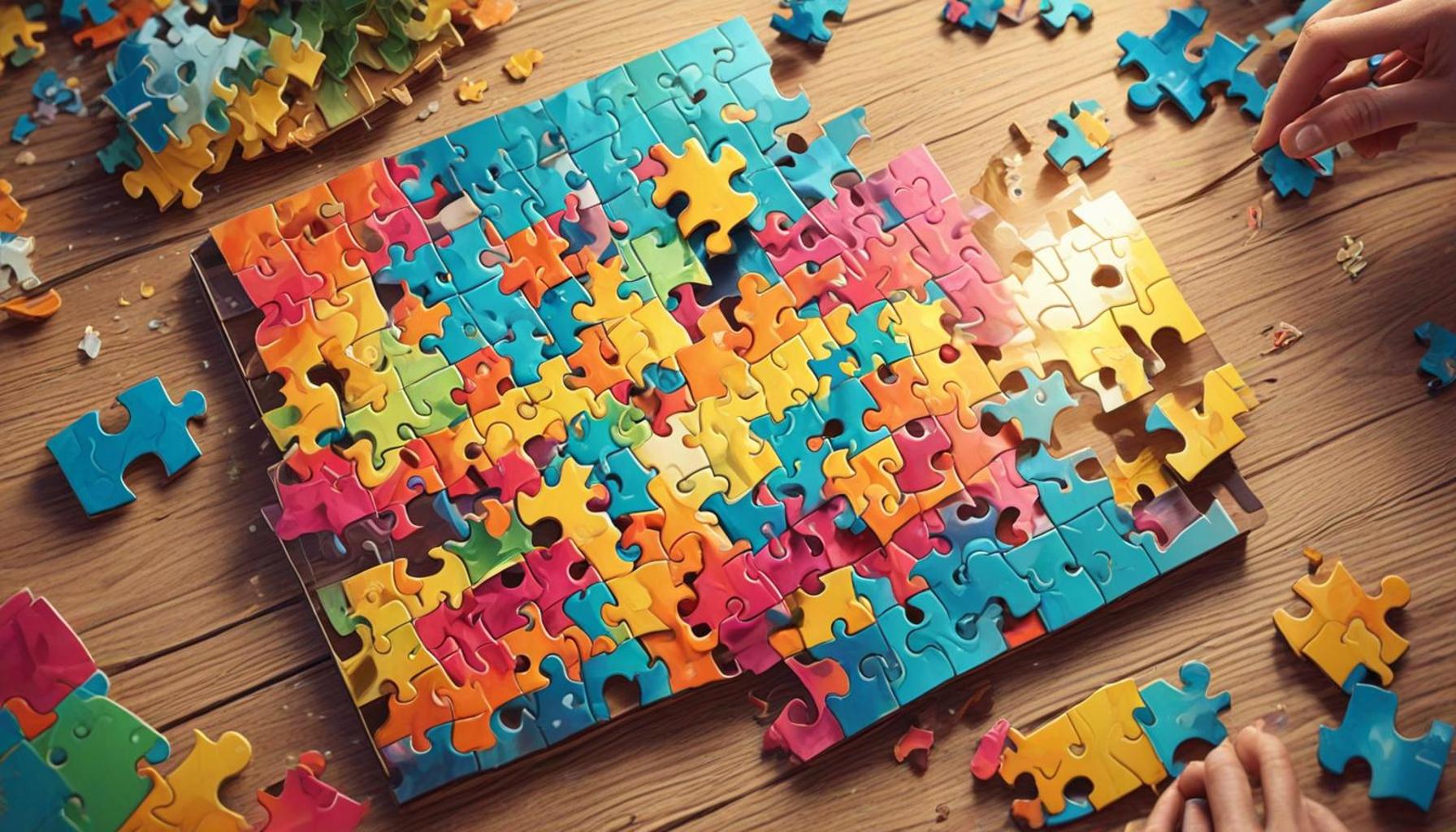
One key aspect of how puzzles stimulate critical thinking lies in their inherent requirement for pattern recognition. When faced with a challenging jigsaw puzzle, for example, participants must identify similar shapes, colors, and edges, fostering a mental map of how pieces can connect. This systematic approach to organizing information translates directly into everyday life. Consider the task of planning a community event—a successful organizer must assess and synthesize numerous details, much like piecing together a puzzle.
Furthermore, visual challenges, such as optical illusions and spatial reasoning exercises, ignite the imagination. They push individuals to look beyond conventional perspectives and perceive the world in multifaceted ways. This ability to shift viewpoints is particularly important in creative fields, where artists and innovators frequently need to transform abstract ideas into tangible concepts. In Nigeria, where creativity thrives in music, art, and entrepreneurship, the impact of these visual exercises can be seen in various practices, from the intricate beadwork of traditional artisans to modern graphic designs.
- Enhanced Decision-Making: Puzzles often involve making quick yet informed decisions based on incomplete information. This skill is invaluable in fast-paced environments, such as business, where timely choices can lead to success or failure.
- Collaborative Problem Solving: Many puzzles are designed for groups, promoting teamwork and enhancing communication skills. The collaborative spirit seen in Nigerian football viewing parties, where friends analyze game strategies, mirrors this aspect of puzzle-solving, strengthening communal bonds.
- Resilience and Perseverance: Encountering roadblocks in puzzles teaches players to persist in the face of challenges. This morale-boosting resilience nurtured through gameplay can empower individuals to tackle obstacles in their personal and professional lives.
As various studies demonstrate, engaging with puzzles leads to long-term investment in cognitive skills. For example, a 2021 study found that individuals who regularly participate in puzzles exhibit increased mental flexibility and improved problem-solving capacities over time. This cognitive agility is particularly crucial in today’s dynamic world, where the ability to think critically can set individuals apart in both educational and professional arenas.
By incorporating puzzles and visual challenges into daily routines, both children and adults can harness these cognitive benefits. From a simple crossword puzzle found in a local newspaper to a captivating maze designed for the digital age, the vast range of options ensures that there is a suitable challenge for everyone. As we explore more about how to foster creativity and critical thinking through these engaging activities, let us recognize that these challenges enrich our lives in profound ways.
| Category | Benefits |
|---|---|
| Creative Problem Solving | Puzzles encourage innovative solutions by presenting unique challenges. |
| Enhanced Cognitive Skills | Engaging in visual challenges sharpens analytical thinking and memory. |
Visual challenges, such as puzzles, serve as powerful tools in stimulating both creativity and critical thinking. The demand for creative problem solving while navigating through intricate patterns and layers of complexity compels individuals to think outside the box. This is not just an exercise in logic but a vibrant, imaginative journey that fosters a flexible mindset.Moreover, these activities are found to enhance cognitive skills significantly, improving memory retention and analytical abilities. Engaging with puzzles prompts the brain to connect disparate pieces of information, nurturing an environment where critical thinking can flourish. The benefits extend beyond recreation, offering profound implications for professional scenarios where innovative solutions are needed. As more research surfaces, it becomes evident that the interplay between mental challenges and fundamental brain development is too vital to overlook. Such insights lead enthusiasts to explore how integrating puzzles into daily routines may unlock new levels of creativity in their lives. Transforming mundane moments into stimulating cognitive opportunities could redefine personal and professional growth for many.
RECOMMENDED: Check out this similar article
Visual Challenges as Catalysts for Imagination
The integration of visual challenges and puzzles into educational practices can significantly enhance creativity and critical thinking skills among individuals. These challenges can come in numerous forms, from visual brain teasers to interactive problem-solving activities, and all share a common goal: to engage the mind actively and stimulate innovative thought processes. In the vibrant educational landscape of Nigeria, where innovation is key to addressing local challenges, utilizing these tools can dynamically reshape learning experiences.
For instance, the practice of creating visual diagrams to represent complex information can help learners not only to understand various subjects better but also to express their own ideas visually. This method encourages creativity, allowing students to break down intricate topics into simpler, more digestible components while fostering their artistic abilities. Schools in urban areas, such as Lagos and Abuja, have started incorporating such methods into their curricula, emphasizing the importance of visual literacy alongside traditional educational metrics.
Moreover, visual challenges such as brain teasers or riddles encourage lateral thinking—a critical skill that empowers individuals to approach problems from different angles. This is particularly relevant in Nigeria’s diverse landscape of industries, including technology, agriculture, and arts. For instance, young entrepreneurs in tech startups are often confronted with unique hurdles that require an out-of-the-box approach. Engaging in puzzles amplifies their ability to develop innovative solutions, leading to sustainable business models that cater to local needs.
- Cognitive Engagement: Participating in visual challenges stimulates various cognitive processes, keeping the brain active and engaged. Regular exposure to such activities can lead to improved memory retention—a crucial asset for students facing competitive exams.
- Creative Confidence: Visual challenges empower individuals to trust their intuition and creativity. Many Nigerian artists, such as musicians or fashion designers, draw inspiration from solving puzzles, using them to unlock hidden creative potential that translates into their work.
- Multifaceted Learning: Puzzles and visual challenges bridge the gap between disciplines, often blending art and science or mathematics and poetry. This interdisciplinary approach enriches learning experiences and inspires individuals to think more holistically.
Research has shown that consistent engagement with puzzles enhances not only individual creativity but also contributes to group creativity. A study published in the Journal of Creative Behavior found that teams participating in puzzle-solving activities came up with more diverse and innovative ideas compared to those who did not engage in such exercises. In Nigeria’s collaborative work environments, whether in tech hubs or community initiatives, encouraging team-based puzzle challenges can lead to groundbreaking ideas that tackle significant social issues.
The stimulation of both critical thinking and creativity through visual challenges is further illustrated by the global trend of escape rooms and team-building exercises, which have gained traction in Nigeria. These immersive experiences compel participants to think critically, solve puzzles collaboratively, and develop quick reflexes under pressure, all while promoting teamwork and camaraderie.
By fostering an environment where puzzles and visual challenges are readily accessible, individuals from various walks of life can enhance their cognitive agility and creative prowess, setting the stage for innovative solutions that address contemporary challenges throughout the nation.
LEARN MORE: This related article may interest you
Unlocking Potential Through Engagement
In a world increasingly driven by innovation and complex problem-solving, the role of puzzles and visual challenges in enhancing creativity and critical thinking cannot be overstated. As demonstrated throughout this article, these engaging tools serve not only as a means of entertainment but also as profound catalysts for intellectual growth and artistic expression. Through activities that stimulate the mind, individuals are encouraged to explore various perspectives, sharpen their cognitive skills, and enhance their ability to devise innovative solutions.
In the context of Nigeria’s vibrant educational landscape and booming entrepreneurial sectors, integrating puzzles and visual challenges into daily learning and work practices can noticeably uplift individual and group creativity. The shift towards a more interdisciplinary approach that merges arts with sciences, as seen in urban school systems, provides a solid framework for the next generation of thinkers and creators. Furthermore, programs that promote collaborative puzzle-solving can pave the way for groundbreaking ideas that address social and economic challenges, nurturing a culture of innovation that reflects Nigeria’s rich diversity.
As we continue to embrace the power of puzzles and visual challenges, it becomes imperative to cultivate environments that celebrate thinking differently and creatively. By doing so, we empower ourselves and future generations to not only solve existing problems but to envision entirely new possibilities and reshaping the future landscape of our society.
In conclusion, fostering a passion for puzzles and visual challenges can ignite the latent creativity residing within every individual, unlocking a treasure trove of potential that, when combined, can lead to sustainable development and progression. As the nation moves forward, the question remains: are we ready to embrace these vital tools as gateways to a more innovative, thoughtful, and creative Nigeria?

Linda Carter
Linda Carter is a writer and puzzle expert specializing in mind games, brain teasers, and cognitive challenges. With extensive experience helping individuals enhance their problem-solving skills and think critically, Linda shares her knowledge on our platform. Her goal is to empower readers with practical advice, engaging puzzles, and strategies to sharpen their minds and achieve success in the captivating world of mind games and puzzles.